Why the 2026 World Cup is the Best Career Opportunity in Sports Media Right Now
Six billion people. 104 matches. Three countries. $8.9 billion in tournament revenue. TikTok and YouTube as official preferred platforms. And a media ecosystem so large that it has outgrown every commercial container built to hold it. For every aspiring sports media professional, the 2026 World Cup is the most significant career opportunity of the decade.

Every four years, the world stops. Not for an election, not for a cultural moment that any broadcaster planned or any algorithm predicted. For football.
The FIFA World Cup is the most watched sports event in history; the only event that genuinely reaches every continent, every demographic, every media format simultaneously.
The Qatar 2022 final between Argentina and France drew 1.42 billion viewers — the largest audience ever measured for a single sporting event in the history of global broadcasting. The entire tournament engaged 5 billion people in some form.
The 2026 edition — 48 teams, 104 matches, three host nations, sixteen cities across the United States, Canada, and Mexico, running from 11 June to 19 July — is the largest World Cup in history by every structural measure. The revenue it will generate ($8.9 billion for FIFA alone), the audience it will reach, and the media infrastructure it has mobilised make it the biggest sports media event ever staged.
For aspiring sports media professionals, this is not background noise. It is a direct, specific, time-limited career opportunity, and it is available right now, across every discipline, at every level of experience.
This article explains why. And more importantly, it explains how.
The Scale of the Opportunity: Why This World Cup Is Different
Before we get to the how, it is worth understanding the why, because the 2026 World Cup is not just the biggest World Cup. It is structurally different from any World Cup that has come before it, in ways that directly expand the media opportunity for everyone working in or entering the industry.
The expansion to 48 teams and 104 matches
The previous format featured 32 teams and 64 matches; 2026 has 48 teams and 104 matches — 40 additional games, involving 16 additional nations, across 39 days.
Every additional match is an additional broadcast slot, an additional set of player profiles to write, an additional tactical breakdown to produce, an additional social media campaign to run, an additional PR story to pitch, an additional set of photographs and video to capture. The content requirement for 2026 is not incrementally larger than 2022. It is categorically larger.
The North American host
The United States is the world’s largest sports media market. The 2026 World Cup is the first major tournament held in summer in North America since the 1994 World Cup, hosted at a moment when soccer was still fighting for legitimacy.
In 2026, the sport arrives in a country transformed: MLS in its 30th season, Lionel Messi completing his third season with Inter Miami, 37% of the US general population expecting their interest in soccer to increase over the next 18 months according to Nielsen Fan Insights, and roughly one-third of US fans having become fans in the last five years.
The US audience for this tournament is not the same as the US audience for 1994. It is vastly larger, more engaged, and more media-active.

The primetime factor
The last World Cup was held in Qatar, which meant European audiences were watching at 10pm, and American audiences at 4am. The 2026 tournament hosts in North America mean that European matches are in morning prime time, and US matches are in evening prime time.
For broadcasters, advertisers, and digital platforms, this is transformative. The media opportunity for 2026 in terms of advertising and viewership windows is the most commercially favourable in the tournament’s history.
The digital infrastructure
FIFA has signed TikTok as its first-ever “Preferred Platform” for World Cup video content, in a deal announced in January 2026 that gives TikTok creators access to press conferences, training sessions, and FIFA archival footage. YouTube has also been designated a Preferred Platform, with broadcast rights holders able to livestream match kickoffs directly within the app.
FIFA’s own social media channels generated 811 million total engagements during Qatar 2022 and 3.6 billion video views, a 202% rise over 2018. The creator economy infrastructure around the 2026 tournament has been built more deliberately and more extensively than for any previous edition. And 93% of fans say they will second-screen the tournament, consuming content on their phones while watching matches on television.
The commercial explosion
Sports rights spend peaks at $66.6 billion globally in 2026, with football claiming over a third of it. Ferrero North America has committed over $100 million to World Cup marketing campaigns. Home Depot is activating across multiple host cities. Kia, Visa, Adidas, Coca-Cola, McDonald’s, and 13 official partners in total are investing at unprecedented scale.
The World Cup is projected to contribute $40.9 billion to global GDP. In the US alone, FIFA projects a $17.2 billion GDP boost and 185,000 jobs. The commercial ecosystem around this tournament (brands, agencies, broadcasters, digital platforms, sponsors) is generating a hiring wave across sports media that will continue for months after the final whistle.
The 2026 World Cup is, in the most literal sense, the biggest opportunity in sports media right now. The question is what you do with it.

The Stories Beyond the Sport
The most important thing to understand about covering the World Cup as an aspiring sports media professional is this: the football is a small part of the story.
The biggest, most enduring, most shareable media from every World Cup is not the goals. It is the human narratives surrounding them. The player who came from nothing. The country competing for the first time. The fan who spent their life savings to be there. The immigrant community in a US host city watching their home nation play on American soil for the first time. The local business that built its entire marketing strategy around one match. The story that transcended football and reached people who had never watched a game in their lives.
This is where aspiring journalists, writers, content creators, and documentary makers should be looking — not at the match reports, which every major outlet will cover, but at the stories around and behind the tournament that nobody else is pursuing.
The immigrant community stories
The United States is a nation built by immigrants, and 45% of US soccer fans primarily support a team other than the USMNT, their loyalties shaped by heritage, family history, and cultural identity.
When Morocco plays, the Moroccan communities of Atlanta and New York become their own media event. When Mexico plays at any of the three host cities in the US, the Mexican-American communities of those cities generate stories of belonging, pride, and cultural identity that are genuinely moving and genuinely underreported.
These stories exist in every host city, around every competing nation with a significant diaspora in North America. They are not being told by ESPN or Fox Sports. They are being told, or not being told, by journalists and creators who go looking for them.

The local business stories
Every bar, restaurant, sports pub, and community space within reach of a host city is building a World Cup strategy. The Irish bar in Dallas creating a schedule of viewing parties for thirty-two different nations.
The Brazilian restaurant in New York that has sold out its table reservations for every Brazil group-stage match. The independent bookmaker in Kansas City running a prediction wall on its shopfront for forty-eight teams. The woman who has turned her garage into a Mexico-themed fan zone for her community.
These are stories of entrepreneurship, community, and the economic power of football, and they are the content that non-football audiences engage with as much as committed fans.
The cultural intersection stories
The 2026 World Cup arrives in a geopolitically charged moment. Human Rights Watch has published a Reporters’ Guide specifically for journalists covering this tournament, flagging the intersection of US immigration enforcement, media freedom in Mexico, and the rights of immigrant communities who will gather in fan zones to support their home nations.
These are not peripheral stories. They are central to what this tournament means in 2026, and the journalists who cover them with intelligence and care will be producing some of the most significant sports-adjacent journalism of the year.

The first-timer stories
Sixteen of the 48 teams competing in 2026 are doing so for the first time, or for the first time in a generation. The players from those nations who have spent their entire careers working toward a World Cup that their country had never previously reached.
The coaches who built programs in countries where football was secondary. The fans who have waited lifetimes for this moment. Every one of those stories is genuinely moving, and most of them will not be told by anyone with institutional resources or global distribution.
The American soccer story
The 2026 World Cup is happening at the precise moment when American soccer is completing a transformation that began in 1994. MLS has grown from eight teams to thirty. Lionel Messi is in Miami. Christian Pulisic is one of the most recognisable athletes in the country.
A generation of young American players developed through the academy systems that the 1994 World Cup inspired has reached its peak. The story of how the United States became a genuine football nation over 30 years is one of the most compelling sports media narratives available, and the 2026 tournament is the punctuation at the end of it.

The Opportunities: Every Role in Sports Media
The World Cup creates specific, concrete opportunities for professionals across every sports media discipline. Here is how to think about it role by role.
Journalists and Writers
The 2026 World Cup is the largest simultaneous editorial commission in sports journalism. Every outlet that covers sport is covering this tournament, from global publications to local newspapers in host cities to specialist football sites to business and culture publications that only engage with football during World Cups. The demand for quality sports writing increases across every category.
The opportunity for aspiring journalists is not to compete with the press corps on match reports and post-game quotes. It is to identify the specific stories that the established press corps will not pursue; the human interest angles, the community stories, the economic narratives, the first-timer profiles, the cultural intersection pieces, and to pitch them specifically and compellingly to the outlets most likely to commission them.
Pitch now. Do not wait until June 11. The outlets planning their World Cup coverage are commissioning now, assigning features in advance, and looking for journalists with specific angles and specific connections. A compelling pitch with a clear story, a named subject, and a defined angle has a genuine chance of being commissioned even by publications the aspiring journalist has not previously worked with. The World Cup creates an editorial openness to new voices that does not exist during normal periods.
For UK-based journalists particularly: the Premier League clubs whose players are competing, the fan communities across Britain following their national teams, and the British media industry’s own relationship with a tournament happening during UK working hours for the first time since 2014 — all of these are story angles specific to the UK context.

Content Creators and Social Media Professionals
The FIFA-TikTok Preferred Platform deal is the most significant opportunity for content creators in the history of the World Cup. For the first time, a select group of TikTok creators will receive official credentials to access press conferences, training sessions, and behind-the-scenes moments.
A wider group will have access to FIFA archival footage for co-creation. This is creator access at a level that was previously available only to accredited broadcasters.
Applications for the FIFA TikTok creator programme should be on every football content creator’s immediate to-do list. But the opportunity extends far beyond the official programme. TikTok’s own data shows that fans watching sports content on TikTok are 42% more likely to tune in to live matches, which means World Cup TikTok content is not competing with broadcast, it is amplifying it. Brands are already activating in April, according to TikTok’s own commercial team. The content window for the World Cup is not June. It is now.
For social media professionals working with brands, the commercial ecosystem around 2026 is the most active in the tournament’s history; 81% of UK brands plan to increase their influencer budgets in 2026, according to Kolsquare.
Brand content strategies built around genuine football culture, rather than just logo placement, are the ones generating the most engagement, and that requires social media professionals who understand both the sport and the platform. The agencies, brands, and clubs building their World Cup social strategies need people who can do both.
The 93% second-screening figure is the structural context for everything a social media professional needs to plan: almost everyone watching the World Cup on television will simultaneously be on their phone. Every second of every match is a content opportunity for a creator or social team who understands what the second-screen audience is looking for in that moment.

Broadcast and Production Professionals
The broadcast production requirements of a 104-match tournament across 16 cities in three countries are, by some distance, the largest in the history of sports broadcasting. Fox Sports and Telemundo hold the English and Spanish-language rights in the United States. The BBC and ITV hold the UK rights. Broadcasters across more than 200 territories are producing their own coverage of every match.
The International Broadcast Centre is located at the Kay Bailey Hutchison Convention Center in Dallas. At any given moment during the tournament, dozens of production teams across three countries and 16 host cities will be operational simultaneously. Camera operators, editors, producers, directors, studio managers, graphics technicians, logistics coordinators — the hiring requirement for this production at every level of experience is enormous.
Entry-level broadcast roles at major sporting events of this scale typically require previous live sports production experience, but the World Cup creates a unique opportunity for anyone who can demonstrate relevant skills at any level.
Local production companies contracted by major broadcasters to provide host city support, social content teams embedded with broadcast partners, and the digital production infrastructure around streaming platforms all represent entry points that are more accessible than the main broadcast teams.
For aspiring broadcasters who are not yet in a position to land a role with a major network: cover the World Cup independently. Build a body of work during the tournament that demonstrates what you can do on the largest stage. The portfolio assembled during a World Cup — regardless of the platform on which it is published — is uniquely compelling evidence of capability under the pressure and complexity of a major international event.

PR and Communications Professionals
The PR and communications opportunity around the 2026 World Cup is one of the most genuinely open and underappreciated in the entire tournament landscape.
Every competing nation’s football federation has a communications operation that is managing the largest media interest their sport will generate in a four-year cycle.
Every sponsor and official partner has a PR team executing campaign activations across three countries. Every host city committee has a communications function managing the public narrative of the world’s largest sporting event landing in their city.
FIFA itself has posted Communications and Media Operations roles across all 16 host cities, accessible through jobs.fifa.com. Host city committees — in New York/New Jersey, Los Angeles, Dallas, Atlanta, Seattle, Kansas City, Miami, Philadelphia, Boston, San Francisco Bay Area, in the US, plus Toronto and Vancouver in Canada, and Mexico City and Guadalupe/Monterrey in Mexico — are all building their own communications operations.
Beyond the official structures, the World Cup creates a vast secondary PR ecosystem. Every major brand activated around the tournament needs communications support. Every athlete competing has a personal brand that the World Cup will amplify, and their representation needs people who understand the media environment the tournament creates. Every national federation that qualifies for the first time will need communications professionals who can manage an international press operation in an unfamiliar environment.
The aspiring PR and communications professional who has been building their sports media knowledge has a specific and compelling pitch: I understand this industry and I understand how to communicate within it. The World Cup is the moment to make that pitch to agencies, to federations, to brands, to host city organisations, with the confidence that the demand for quality communications expertise is at its four-year peak.

Photographers and Videographers
Over 5 million people are expected to attend the 104 matches across three countries; 6 billion people will engage with the tournament across media platforms. And every moment — on the pitch, in the stands, in the fan zones, in the host cities, in the communities surrounding the venues — is a visual story waiting to be captured.
The formal accreditation pathway for photographers at the World Cup is competitive and primarily serves established wire agencies and major publications. But the visual opportunity around the tournament extends far beyond accredited match photography.
Fan culture photography in host cities. Street photography in the communities affected by the tournament. The faces of immigrant communities watching their home nations compete. The visual documentation of fan zones, viewing parties, and community gatherings. The environmental portraiture of players, coaches, and officials in the days around matches. None of these require official FIFA accreditation, and all of them produce content that media organisations, brands, and digital platforms are actively seeking.
Videographers who can produce broadcast-quality content on mobile setups (the kind of work that serves the TikTok creator programme and the social media operations of broadcasters and brands) are among the most in-demand production professionals in the current market.
The shift to vertical, mobile-first video as the primary content format for World Cup social media means the technical requirements for high-impact content have been dramatically democratised. The skill is in the storytelling, not the equipment.

Data Journalists and Analysts
The 2026 World Cup is the most data-rich football tournament in history. Every match, every player, every tactical system is tracked in real time across multiple data providers like Opta, StatsBomb, SofaScore, and others. The audience analytics around the tournament (viewership by platform, engagement by territory, social media metrics by team and player) are being measured more comprehensively than any previous edition.
The data journalist who can access, interrogate, and contextualise this data quickly is producing some of the most widely shared content in sports journalism. The tournament creates a 39-day window in which the appetite for statistical context is enormous and continuous.
For aspiring data journalists: start building your public data portfolio now, using historical World Cup data that is publicly available from multiple providers. Publish analyses on your own platform (Substack, Medium, or a personal site) that demonstrate your ability to extract insight from football data and communicate it clearly.
The tournament will generate enormous amounts of new data from June 11. The journalists who have a proven public track record of analysing football data before the tournament starts will be the ones best positioned to capitalise on it during the tournament.

Media Managers and Digital Strategists
Every national federation competing in 2026 runs its own digital media operation during the tournament. Every club whose players are selected manages its own social media presence around the call-ups, the preparations, and the matches. Every brand activated around the tournament has a digital strategy that needs to be executed across multiple platforms, languages, and time zones simultaneously.
The role of the media manager during a World Cup is simultaneously the most demanding and the most visible of the cycle. The decisions made about which stories to amplify, which moments to capture, which platforms to prioritise, and which content formats to deploy are made in real time, under enormous pressure, in front of the largest audience the organisation will ever have.
Getting it right during a World Cup is a career-defining achievement. Getting it wrong, or simply not being there, is a missed opportunity that does not come around again for four years.
For aspiring media managers and digital strategists who are not yet in a role that takes them to the tournament: cover the digital strategy of the tournament from the outside. Write analyses of what the national federations, the official partners, and the host city organisations are doing well and doing poorly.
Build an argument about what effective digital strategy looks like in this environment, grounded in specific examples and specific data. This is the kind of visible, informed public positioning that makes a candidate stand out when the hiring decisions for the 2030 World Cup cycle begin.

How to Capitalise Right Now
The World Cup starts on 11 June. The career opportunity it creates does not begin in June. It began months ago for the most prepared, and it is beginning now for everyone else. Here is how to move.
Start creating immediately
Every piece of World Cup content you produce between now and the final whistle is potential portfolio material, potential audience-building material, and potential evidence of your capability for a future employer or client. Do not wait for the tournament to start before you begin demonstrating what you can do within it.
Identify your specific angle
The aspiring journalist who covers “the World Cup” is competing with thousands of established journalists. The one who covers “the Moroccan community in Atlanta and how the World Cup is transforming their relationship with American identity” is covering something almost nobody else is covering. Specificity is not a limitation. It is a competitive advantage.
Pitch and pitch again
The commissioning editors at every major publication are planning their World Cup coverage right now. A compelling, specific pitch with a named story and a clear angle lands now, not in June when every journalist in the world is filing simultaneously.

Build or apply to the official programmes
FIFA’s TikTok creator programme, YouTube’s Preferred Platform creator access, and the communications and media operations roles posted at jobs.fifa.com and through host city committees are all live opportunities. Apply. The worst outcome is a rejection that gives you a clearer sense of where you are in the market.
Be in a host city if you can
The media presence around the 2026 World Cup extends far beyond the accredited press zone inside the stadiums. Fan zones, host city activations, viewing parties, community events, street culture — all of these are media opportunities that are accessible without credentials. If you can be in Los Angeles, Dallas, New York, or any other host city during the tournament, you have access to content that people not in those cities cannot produce.
Document everything
The body of work assembled during a World Cup, regardless of platform, regardless of scale, is a portfolio of evidence assembled during the most significant sports media event of the decade. Every article published, every video uploaded, every social post that gained traction, every credential earned, every relationship built is capital for what comes next.

The Long Game: Why This Moment Matters Beyond June
The World Cup ends on 19 July. The sports media careers it launches, the relationships it builds, the portfolios it creates, and the reputations it establishes extend for years beyond the final whistle.
The sports media professionals who covered the 1994 World Cup — who were in their twenties, building their careers, figuring out what they were capable of in the most demanding environment their industry produces — went on to define American sports media for the following three decades.
The ones who covered 2026, who used the tournament to demonstrate what they could do at the largest scale available, will do the same.
The World Cup is not just an event. It is a proving ground. The sports media professionals who show up for it — who prepare, pitch, create, apply, network, and produce — will carry what they build there into every professional conversation they have for the rest of their careers.
It starts on 11 June. The preparation starts now.
Ready to take the next step?
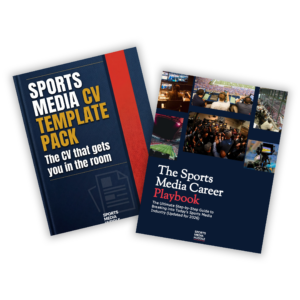
If you’re looking to turn these insights into a clear direction for your own career, The Sports Media Career Playbook breaks down the modern industry, the skills that matter most, and how to position yourself within today’s evolving media landscape.
Whether you’re just starting out or looking to refine your path, it’s designed to help you move forward with purpose and clarity.