LaLiga Just Shut Down Its Own TV Channel. Here's What It Tells Us About Sports Media in 2026
After almost 10 years, LaLiga+ goes dark on June 30. The platform was originally a testing ground for a future where football leagues produce and distribute their own content, cutting out the broadcasters entirely. That future arrived in some places and not others. The reasons why is one of the most instructive stories in sports media right now.

On June 30, 2026, a streaming platform called LaLiga+ will cease broadcasting at midnight. Most people outside of Spain have probably never heard of it. That is partly the point.
LaLiga+ launched in 2015 under the name LaLigaSportsTV, originally as a home for minority sports (handball, futsal, basketball, athletics) that had no meaningful broadcast home anywhere else. Over time it became something more: a testing ground for what the Spanish football league’s leadership hoped might become a fully self-sufficient media operation.
The idea, which was circulating with significant energy across world sport at the time, was seductive: what if football leagues stopped selling their content to broadcasters and simply became broadcasters themselves? What if they cut out the middleman entirely?
In a statement published last week, LaLiga explained the closure with the kind of carefully managed language that communicates more between the lines than in them. The platform, they said, had “fulfilled its cycle and the objectives for which it was created.”
The audiovisual market had evolved. Consumer habits had changed. Many of the sports the platform had nurtured had grown enough to find their own audiences and their own distribution. The decision, they added, reflected “a future-oriented strategic vision aimed at continuing to connect with audiences wherever they are.”
Translation: it did what it was supposed to do, the wider ambition did not materialise, and LaLiga will go back to doing what European football leagues do best by selling their content to broadcasters who know how to distribute it.
The real story behind this quiet closure is fascinating. And it tells aspiring sports media professionals something important about the industry they are entering.
The Dream of Cutting Out the Middleman
To understand why LaLiga+ existed, you need to understand the moment it was created. The mid-2010s were when sports leagues began seriously asking whether they needed broadcasters at all.
The logic was straightforward. A football league’s product — the matches, the stories, the drama — is the most valuable content in sport. Broadcasters pay enormous sums to carry it. Sky Sports, BT Sport, DAZN, BeIN: these organisations are essentially distributors who have made billions by standing between the league and the fan, taking their margin in exchange for production expertise, reach, and existing subscriber bases.
What if the league could do all of that itself? Keep 100% of the revenue. Own the fan relationship directly. Control the editorial narrative entirely.
In the United States, the major leagues had already moved meaningfully in this direction. NFL Network launched in 2003 and spent two decades as a genuine broadcast operation, carrying games exclusively, running 24-hour programming, building a journalism and studio analysis operation that employed hundreds of sports media professionals. NBA TV launched in 1999 and built a similar infrastructure. MLB Network, NHL Network: every major American league eventually had its own channel.
The European football world watched all of this and drew the obvious conclusion. If the NFL and NBA could do it, why couldn’t LaLiga? Why couldn’t the Premier League or Serie A or the Bundesliga? The leagues had the content, they had the brands, and they had the technology to distribute it directly to fans for the first time in history. All they needed was the will and the infrastructure.
LaLiga’s answer was LaLigaSportsTV; a cautious, methodical testing ground that started with minority sports rather than top-flight football, deliberately keeping the experiment contained while the league learned the mechanics of running a broadcast operation.
The plan, at least in theory, was to scale up. To use the platform to develop the production and distribution capabilities that would eventually allow LaLiga to bring its main product in-house.
It never happened. And the reasons why are instructive.

Why It Worked in America and Struggled in Europe
The American league channel model succeeded for several reasons that simply do not translate to the European football context, and understanding those differences illuminates a great deal about how sports media works.
The structural difference in rights
In the US, the major leagues control their media rights collectively and negotiate from a position of enormous commercial power. The NFL’s current broadcast deal — split across Amazon, CBS, ESPN/ABC, Fox, NBC, and NFL Network — is worth approximately $100 billion over 11 years.
The league’s collective commercial clout allowed it to maintain NFL Network as a credible operation that broadcasters would pay to carry, even while simultaneously licensing the premium games to those same broadcasters.
European football leagues operate differently. In the Spanish market, LaLiga’s domestic rights are held by Movistar Plus+ and DAZN through to 2032, a deal worth approximately €990 million per season. Those contracts exist because commercial broadcasters have built the audience infrastructure, the subscriber bases, and the distribution networks that give LaLiga’s games the viewership they command.
The league cannot easily replicate that infrastructure by going direct-to-consumer. The broadcasters are not just intermediaries, they are part of what makes the product valuable.

The subscriber economics
The cold reality of direct-to-consumer streaming is that it requires subscriber numbers to be viable at any significant scale. NFL Network, at its 2013 peak, was available to 72.3 million US television households — a distribution achieved through carriage deals with cable operators across the largest pay-TV market in the world.
Even then, by 2024, that figure had declined to 46.7 million, which is one of the reasons the NFL ultimately sold NFL Network to ESPN in a deal that closed in February 2026, with the league taking a 10% equity stake in ESPN in exchange. If the NFL — the most commercially powerful sports league on earth — ultimately concluded that owning a broadcast network was more trouble than it was worth, the structural argument against European leagues trying to replicate this model becomes considerably stronger.
Ligue 1 is currently living through the most vivid real-time illustration of this dynamic. After DAZN’s €400 million-per-year deal collapsed in 2025 following subscriber shortfalls and a breakdown in relations, the French league launched its own streaming platform, Ligue 1+, in July 2025, making it the first major European football league to go fully direct-to-consumer for live domestic coverage.
Early subscriber numbers were encouraging; over one million within the first month. But club broadcast revenues collapsed catastrophically. Angers SCO, a Ligue 1 club, publicly reported receiving just €3 million in TV revenue in 2025-26, compared to the €19 million they had previously received under the DAZN arrangement.
To match the revenue of a conventional broadcast deal, analysis suggests Ligue 1+ would need to triple or quadruple its current subscriber base — a mountain that looks considerably steeper the longer it is examined.
The production and expertise gap
Running a broadcast operation at professional level requires an enormous concentration of specific skills: producers, directors, editors, commentators, analysts, graphics teams, streaming technicians, rights management professionals, and the journalistic infrastructure to generate editorial content across the hours that are not filled with live matches.
These are skills that broadcasters have built over decades. They are not skills that a football league administration can assemble quickly or cheaply. LaLiga’s decision to start with minority sports rather than LaLiga itself was a recognition of this reality; they were building capacity slowly, cautiously, without staking their core product on an experiment.
The experiment ran for a decade, and the capacity never reached the level required to replace what traditional broadcasters provide.

The NFL’s Lesson: Even the Biggest Leagues Eventually Come Back to Broadcasters
The most revealing data point in this entire story is not LaLiga+ closing. It is what happened to NFL Network, the most successful league-owned broadcast operation in history.
NFL Network launched in 2003 with the explicit backing of the most powerful and commercially sophisticated sports organisation on earth. It ran Thursday Night Football. It covered the combine, the draft, the pre-season, and the off-season with the depth and access that no external broadcaster could match. It employed legendary journalists and analysts. It was, by any measure, the gold standard of what a league-owned channel could be.
And in February 2026, the NFL sold it to Disney. The NFL took a 10% equity stake in ESPN in exchange — a detail that tells you something important about where the value really lies. Rather than owning the media platform itself, the NFL decided that owning a piece of the media infrastructure that distributes their content is more valuable than running that infrastructure themselves.
They gain a seat at the table. They get a financial interest in ESPN’s success. But the daily work of production, distribution, and journalism goes back to the professionals whose entire business is built around those skills.
Commissioner Roger Goodell’s statement at the time was illuminating: “Whether it was debuting Thursday Night Football, televising the Combine, or telling incredible football stories through original shows and breaking news, NFL Network has delivered. The Network’s sale to ESPN will build on this remarkable legacy.” You can read between those lines easily enough. The legacy is real. The future belongs to a different structure.
The underlying principle here is not that league-owned channels are failures. NFL Network was not a failure. NBA TV is not a failure, it has been running since 1999.
What these examples demonstrate is that even at the very top of the market, owning and operating a broadcast channel is hard, expensive, and ultimately produces diminishing returns relative to the alternative: selling your content to professional broadcasters at maximum value and letting them carry the operational burden.

What This Means for the Sports Media Professional
Here is where the LaLiga+ closure becomes directly relevant to anyone building a career in sports media, because the story contains several important truths about the industry that aspiring professionals should understand clearly.
Broadcasters are not being disintermediated
The narrative that leagues and clubs would eventually bypass traditional media entirely and speak directly to fans has been circulating for over a decade. It contains a partial truth; direct-to-consumer digital channels have created new pathways and new opportunities.
But the LaLiga+ closure, the NFL Network sale, and the Ligue 1+ revenue crisis all point in the same direction: professional broadcasters, production companies, and sports media organisations still sit at the centre of the industry, because they provide value that leagues and clubs cannot easily replicate. The skills of professional sports media are not being replaced. They are being sought after more actively than ever.
Jobs at the intersection of sport and media are expanding
One of the less discussed consequences of the league-owned channel era is the extraordinary expansion in the number of sports media roles that sit inside sports organisations rather than inside traditional media companies.
LaLiga+ employed production staff, content managers, digital editors, social media professionals, and data analysts. It created roles that did not exist before. The NFL Network employed hundreds of sports media professionals. NBA TV has its own journalism, production, and studio operations. Ligue 1+ is currently building its own content infrastructure.
These organisations are not replacing broadcasters, they are building parallel media operations that create enormous demand for sports media professionals with specific expertise.

Understanding the rights landscape is a career advantage
The most valuable sports media professionals working at the intersection of sport and media in 2026 are the ones who understand both the sport itself and the commercial infrastructure around it; the rights deals, the broadcast partnerships, the platform strategies, the subscriber economics.
The ability to read a media rights landscape, understand what different distribution models mean for different types of content, and communicate intelligently about the commercial decisions that shape what gets made and where it is seen is a genuinely rare skill.
The executives who will make the next generation of decisions about how sport is distributed — at leagues, at clubs, at broadcasters, at streaming platforms — will be the people who developed that dual literacy early in their careers.
The minority sports story is the untold opportunity
The most quietly significant line in LaLiga’s closure announcement was this: many of the sports and federations the platform had carried had “developed their own audiences and direct distribution strategies.”
LaLiga+ spent a decade building visibility for handball, futsal, basketball, and other sports that had no meaningful broadcast home. Some of those sports now have their own platforms, their own social media presences, their own fan communities.
The sports media professionals who built their careers covering those sports on LaLiga+ — who were there when nobody else was watching — are now the established voices in those communities.
This is the early-mover advantage in action. The sports that are underserved by traditional media today are the ones where that advantage is still available.

The State of Play: Where League-Owned Broadcasting Actually Works
It is worth being precise about what the evidence actually shows, because the picture is more nuanced than a simple narrative of success or failure.
League-owned channels work well when they serve supplementary and off-season content; the draft, the combine, the transfer window, documentaries, archive material, analysis programming, minor competitions, rather than replacing the premium live product.
NFL RedZone, which aggregates scoring plays from every simultaneously airing game, is a genuine innovation that no external broadcaster would have created, because it requires the league’s cooperation and relationships to work. NFL Films, which the NFL retained when selling NFL Network, is one of the most respected production operations in American sports media. These are places where league ownership creates genuine editorial and commercial value.
League-owned channels struggle when they are positioned as primary distributors of premium live content in markets where commercial broadcasters already have the subscriber base and the distribution infrastructure to serve that demand more effectively.
This is the lesson of LaLiga+, Ligue 1+’s revenue challenges, and ultimately the NFL Network sale. The leagues are not bad at media. They are being honest about where their competitive advantage lies, and it is not in subscriber acquisition.
The hybrid model that is emerging — leagues as content creators and IP owners, professional broadcasters as distributors, digital platforms as discovery and engagement layers, and the creator economy as the amplification network — is the structure that most closely reflects where the industry is heading.
Understanding each layer of that structure, how it functions, who it employs, and where the career pathways run through it is the most practically useful knowledge a sports media professional can develop right now.

For Your Career: What to Take From This
The LaLiga+ story is not a cautionary tale about sports organisations overreaching. It is a story about the natural lifecycle of a media experiment; one that delivered on its original mission, ran its course, and is being replaced by something better suited to the current environment.
For aspiring sports media professionals, the lessons are specific and actionable.
The skills of professional sports media — production, journalism, rights management, digital distribution, editorial strategy, broadcast operations — are not being made redundant by technology. They are being hired for by an expanding range of organisations: not just broadcasters and publishers, but leagues, federations, governing bodies, clubs, streaming platforms, and the agencies that serve all of them.
The demand for professional sports media expertise has never been higher. The organisations employing it are simply more varied than they used to be.
The roles that sit at the intersection of sport and media — inside leagues and federations, in the communications and media departments of governing bodies, in the content and digital teams of clubs — are where much of the industry’s growth is happening right now.
Most aspiring sports media professionals think about broadcaster and publisher roles. The most interesting career opportunities in 2026 are often the ones inside sport itself. LaLiga+ created them. Its closure will redistribute them. The next version of this experiment, whatever form it takes, will create more.
The media rights landscape is the curriculum. Anyone who wants to understand how sports media works at a strategic level should follow rights deals, platform experiments, and the commercial decisions that leagues and broadcasters make about how to distribute content.
The LaLiga+ closure, the NFL Network sale, and the Ligue 1+ experiment are all chapters of the same ongoing story. The professionals who read that story carefully will be the ones best positioned to operate within it.
Ready to take the next step?
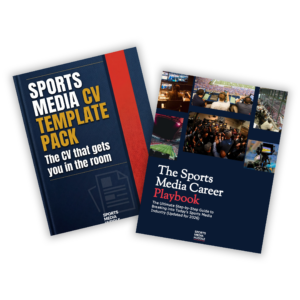
If you’re looking to turn these insights into a clear direction for your own career, The Sports Media Career Playbook breaks down the modern industry, the skills that matter most, and how to position yourself within today’s evolving media landscape.
Whether you’re just starting out or looking to refine your path, it’s designed to help you move forward with purpose and clarity.