Generalist vs Specialist in Sports Media: Which Path Should You Take?
Clarity of focus matters more than ever in modern sports media, and knowing when to specialise or stay broad can shape the direction of your career

At some point in every sports media career, a key crossroads emerges. Should I try to cover everything, or should I narrow my focus and become known for one thing?
Fifteen years ago, when I first entered the industry, the answer looked very different from what it does today. Newsrooms were structured differently, social platforms hadn’t reshaped discovery, and editorial careers were often built through breadth first.
Being a generalist wasn’t just accepted; in many environments, it was expected.
Today, the landscape has shifted. Opportunities still exist for generalists, but the path to getting noticed has changed, and understanding that difference early can save years of frustration.
What being a generalist really means
A generalist isn’t simply someone who lacks direction. At its best, generalism is about adaptability; the ability to move between formats, sports, and roles while understanding how different parts of the industry connect.
My own path has been shaped by that approach. Working across editorial, content strategy, major events, and communications allowed me to see how stories move through the ecosystem, how media relationships evolve, and how different skill sets intersect.
Fifteen years ago, that breadth opened doors because the industry valued versatility within traditional structures.
But what worked then doesn’t always translate directly into the current environment. Today’s emerging professionals often need clearer positioning earlier in their careers, particularly in public-facing roles where visibility is tied closely to identity.
The rise of the specialist
Modern sports media rewards clarity. Writers, analysts, podcasters, and content creators who develop a recognisable niche tend to build momentum faster because audiences, editors, hiring managers, and collaborators understand exactly what they offer.
Specialisation doesn’t mean limiting ambition. It means giving your work a clear entry point.
A journalist focusing on youth development, women’s football, or sports business analysis can stand out more quickly than someone attempting to cover every headline. A podcaster who builds authority within one league or storytelling style often develops a stronger, more loyal audience than someone chasing broad appeal.
From an editorial perspective, specialists are easier to place because their voice already feels aligned with a specific conversation.

Where generalists still thrive
Despite the shift toward specialisation, there are areas of the industry where a broader skill set remains incredibly valuable. PR, communications, media strategy, and senior editorial roles often benefit from people who understand multiple disciplines at once.
In many ways, generalism becomes more powerful later in a career, once foundational expertise has been established. Understanding storytelling, production, media relations, and audience behaviour allows professionals to connect dots that others might miss. That broader perspective can be a significant advantage when shaping campaigns, leading teams, or navigating complex projects.
The key difference is timing. Early visibility today often comes from specialisation, while long-term progression frequently rewards those who eventually broaden their scope.
If I were starting today
Looking back at my own journey, I would approach the early stages differently if I were starting from scratch now. Instead of positioning myself broadly from the outset, I would likely begin by developing a clear niche tied to the role I wanted to pursue.
For journalists, analysts, and podcasters, that might mean choosing a defined beat or perspective that allows depth to develop quickly. For social-first creators, it could involve leaning into a specific storytelling style or audience segment rather than trying to speak to everyone.
Those working in PR or communications might still benefit from a more generalist mindset, but even there, developing an identifiable area of expertise early on can accelerate growth.
The industry today rewards clarity of voice in ways that simply didn’t exist when many of us began our careers.

The generalist trap
One of the challenges I see more frequently now is what I think of as the generalist trap. It usually starts with good intentions. People want to stay open to opportunity, avoid limiting themselves, and show they can adapt across different areas of sport. On the surface, that flexibility feels like a strength.
The problem is that, in today’s landscape, being too broad too early often makes it harder for others to understand where you fit. Editors struggle to place you. Audiences don’t immediately recognise what you stand for. Even potential collaborators may hesitate because your direction feels unclear.
Fifteen years ago, this wasn’t necessarily an issue. Traditional newsroom structures gave people time to rotate through roles and gradually discover their strengths.
Today, discovery happens in public. Your online presence becomes part of how people evaluate you long before a formal opportunity appears, and without a clear signal of expertise, even strong work can get lost in the noise.
Avoiding the generalist trap doesn’t mean abandoning versatility altogether. It means recognising that early focus creates momentum. Narrowing your direction at the start doesn’t close doors, it gives others a clear reason to open them.

Finding the right balance
The choice between generalist and specialist isn’t binary. Most successful careers move between the two over time. Specialisation helps build early authority, while generalism often becomes more valuable as experience grows and opportunities expand.
What matters is understanding where you are in your journey and what signals you’re sending through your work. Trying to be everything at once can dilute your presence, but narrowing your focus without intention can feel restrictive. The goal is to choose a direction that allows your strengths to become visible while leaving room to evolve.
How to begin narrowing your focus
Niche selection doesn’t need to feel overwhelming. It often starts with recognising the themes that naturally appear in your work; the sports you return to, the angles you enjoy exploring, or the audiences you understand best. Paying attention to those patterns can help guide your direction without forcing you into an artificial label.
At the same time, narrowing down isn’t just about choosing a topic. It’s about aligning your niche with the role you want to build toward and the platforms where that work will live.
The deeper process of defining and refining a niche (and understanding how to position it strategically) is something explored in detail through the Niche Accelerator System, a step-by-step exercise guide that will give you clarity to focus your career. Available in both printable and digitally fillable formats.
Ready to take the next step?
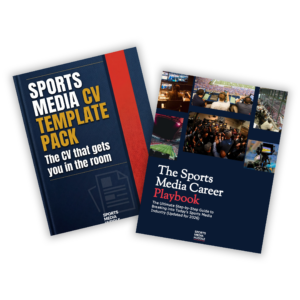
If you’re looking to turn these insights into a clear direction for your own career, The Sports Media Career Playbook breaks down the modern industry, the skills that matter most, and how to position yourself within today’s evolving media landscape.
Whether you’re just starting out or looking to refine your path, it’s designed to help you move forward with purpose and clarity.