Six Key Skills That Actually Get You Hired in Today’s Sports Media Industry
And the ones that matter far more than people realise

For years, aspiring sports media professionals were told to focus on job titles.
Be a journalist. A broadcaster. A producer. A press officer. A PR and Comms account manager.
But in 2026, hiring decisions across the industry rarely begin with titles. They begin with skills, and more importantly, with the ability to apply those skills across multiple platforms, formats, and environments.
The modern sports media ecosystem no longer operates in isolated silos. Newsrooms collaborate with commercial teams. Clubs produce their own documentaries. Podcasters transition into analysts. Social media managers influence editorial strategy.
In this environment, employers and collaborators aren’t just asking what role you want. They’re asking whether you can solve problems, tell stories, and contribute to a constantly evolving media landscape.
Understanding which skills truly matter (and how to develop them) can transform the way you approach your career.
Storytelling: The skill that sits above everything
Technology has changed almost every aspect of sports media, but storytelling remains its foundation.
Hiring managers aren’t simply looking for writers or presenters. They’re looking for people who understand narrative, individuals who can identify what makes a moment meaningful and shape it into something audiences connect with.
Storytelling today extends far beyond long-form articles. It influences how interviews are structured, how short-form video is edited, how social captions are written, and how brands communicate with fans.
Those who understand storytelling don’t just report on sport; they interpret it. They know how to find the human element behind performance, pressure, and progress. That ability remains one of the strongest differentiators between amateurs and professionals.
How to develop it
Start by analysing how stories are told across platforms. Study documentaries, feature articles, and club-produced content. Read great sports books and notice how stories are researched, structured, and shared.
Practice reframing topics into narratives by focusing on people, change, and emotion rather than broad subjects.
Consistently producing short storytelling pieces, even on independent platforms, builds instinct faster than waiting for traditional opportunities.

Platform Fluency: Understanding where stories live
One of the biggest shifts in recent years is the expectation that professionals understand how content behaves on different platforms.
An article written for a website requires a different structure from a LinkedIn post. A TikTok interview demands different pacing from a YouTube feature. Even traditional broadcasters now think in terms of social-first distribution.
Employers increasingly value individuals who recognise these nuances. Platform fluency doesn’t mean chasing every trend; it means understanding audience expectations and adapting storytelling accordingly.
Professionals who grasp how content travels, from press conference to highlight clip to social post, become invaluable because they bridge gaps between editorial, production, and digital teams.
How to develop it
Choose two or three platforms and study them deeply. Observe how successful creators structure openings, transitions, and calls to action.
Experiment with repurposing the same story across formats to understand how tone and pacing shift depending on the audience.

Interviewing and Communication: The ability to unlock stories
Access remains one of the most powerful currencies in sports media, and strong communication skills often determine who receives that access.
Interviewing is no longer confined to formal press conferences. It happens in mixed zones, podcast studios, social-first environments, and behind-the-scenes settings. Those who succeed understand how to listen actively, ask thoughtful questions, and create space for authentic conversation.
But communication extends beyond athletes. Professionals must collaborate with producers, editors, media officers, sponsors, and commercial teams, often under time pressure.
The strongest communicators make others feel comfortable while maintaining clarity and purpose, a balance that consistently stands out in hiring decisions.
How to develop it
Practice structured conversations with athletes, creators, or industry professionals at local events. Review your interviews afterwards and analyse pacing, clarity, and follow-up questions.
Watching experienced presenters handle difficult or unexpected moments can also provide invaluable insight into professional communication styles.

Production Literacy: Understanding how content is built
Even if someone never intends to operate a camera or edit a full broadcast package, production literacy has become a core expectation.
Modern sports media professionals benefit from understanding framing, audio quality, lighting, and basic editing workflows. This knowledge allows them to collaborate more effectively with technical teams and adapt quickly in fast-paced environments where roles often overlap.
Many employers now prioritise candidates who can operate independently; filming a quick interview, capturing behind-the-scenes footage, or assembling short-form content without relying on large crews.
Production literacy doesn’t replace creativity; it enhances it by giving storytellers the tools to execute their ideas.
Learn stakeholder management early.
How to develop it
Start small. Film short interviews on a mobile device, experiment with editing software, and study how professional broadcasts structure segments.
Understanding the basics of shot composition and audio clarity can dramatically improve the quality of your work, even at an entry level.

Editorial Thinking: Seeing the bigger picture
A common misconception is that creativity alone drives success in sports media. In reality, editorial thinking often determines who progresses fastest.
Editorial awareness involves recognising timing, relevance, and audience value. It means understanding why certain stories matter at specific moments and how they fit into broader narratives surrounding leagues, clubs, or athletes.
Professionals with strong editorial instincts don’t just produce content; they anticipate what audiences will care about next. They understand how coverage aligns with brand identity, commercial priorities, and long-term storytelling strategies.
In an industry saturated with content, this ability to prioritise and shape ideas has become one of the most sought-after skills.
How to develop it
Follow industry newsletters, analyse weekly coverage trends, and regularly pitch story ideas, even if only for personal projects.
Ask yourself why certain stories dominate headlines and how they could be approached differently.
Over time, this habit builds the strategic awareness that editors and employers value.

Relationship Building: The skill people underestimate
Behind every successful sports media career lies a network of trusted relationships.
Access to athletes, insight into clubs, and collaboration with production teams often come from consistent professionalism rather than aggressive networking tactics. Those who build trust (by respecting media officers, understanding event protocols, and delivering reliable work) naturally gain more opportunities.
The industry is smaller than it appears. Reputation travels quickly, and those who demonstrate respect for both editorial integrity and organisational structures often progress faster than those chasing visibility alone.
How to develop it
Approach every interaction as a long-term relationship rather than a short-term opportunity. Engage thoughtfully on professional platforms, follow up after collaborations, and remain consistent in how you communicate.
Reliability and professionalism often matter more than experience during the early stages of a career.

The Bigger Picture: Skills over titles
Perhaps the most important shift newcomers must understand is that sports media careers are no longer defined by a single path.
Someone might begin by writing match reports, transition into podcasting, collaborate with a club’s content team, and eventually move into strategic roles within communications or production.
The professionals who thrive are not those who chase titles, but those who develop adaptable skillsets that travel across the ecosystem.
In a landscape shaped by evolving technology and changing audience behaviour, skills (storytelling, communication, production literacy, editorial thinking, and platform awareness) remain the true currency of opportunity.
And for anyone entering the industry in 2026, focusing on these skills isn’t just a strategy. It’s the foundation for building a career that can grow alongside the future of sports media itself.
Ready to take the next step?
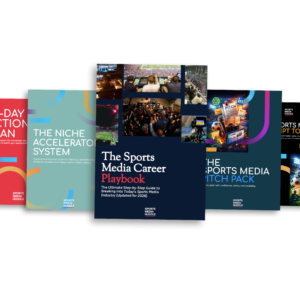
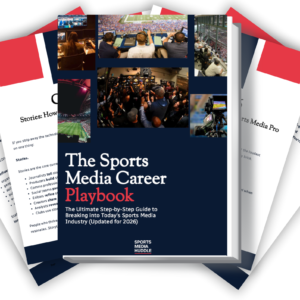
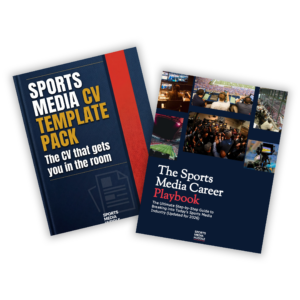
If you’re looking to turn these insights into a clear direction for your own career, The Sports Media Career Playbook breaks down the modern industry, the skills that matter most, and how to position yourself within today’s evolving media landscape.
Whether you’re just starting out or looking to refine your path, it’s designed to help you move forward with purpose and clarity.