What Netflix’s Increasing Presence in Combat Sports Signals for Sports Media
As Tyson Fury and Ronda Rousey head to Netflix, it signals a new era where streaming platforms turn combat sports into global entertainment events, reshaping how sports media works

Live sport moving to streaming isn’t new. What is new is Netflix leaning increasingly into sports that naturally operate like entertainment franchises: boxing and MMA.
It’s a shift further underlined by the recent announcements of Tyson Fury headlining a major Netflix fight card and Ronda Rousey returning to MMA on the platform.
Combat sports is perfect for a platform built on bingeable storytelling. It’s character-led, emotionally driven, full of rivalry narratives, and designed for big “premiere nights.” It creates weeks of buildup and weeks of fallout, which means it creates media opportunities across every format: reporting, production, social, PR, newsletters, podcasting, and influencer-led distribution.
In other words, Netflix isn’t just buying live sport. It’s building an event engine.
Paul vs Tyson was a global media moment, not just a fight
Netflix’s Jake Paul vs Mike Tyson event is the cornerstone example because it produced rare, cross-category scale.
Netflix reported 60 million households watched the main event live worldwide, with the stream peaking at 65 million concurrent streams. A few days later, Netflix framed it even bigger: 108 million live global viewers, again citing the 65 million peak concurrent streams; numbers that far exceed the audience reach traditionally associated with boxing’s pay-per-view era.
Even the undercard data mattered from a media standpoint. Netflix said nearly 50 million households watched the Katie Taylor cs Amanda Serrano bout during the same live event.
For context, boxing’s historical benchmarks were once measured through PPV buys rather than global viewership totals, with Floyd Mayweather vs Manny Pacquiao often cited as the commercial peak at around 4.6 million purchases. Netflix’s model reframes success around mass global audiences rather than individual purchases, effectively resetting expectations around how big a fight night can be.
For aspiring professionals, this is the real takeaway: Netflix can turn a single combat sports night into the kind of global moment that triggers editorial demand, creator demand, brand demand, and constant second-screen conversation.

Netflix is now showing repeatability in combat sports
The most important industry question after Paul vs Tyson was whether Netflix could replicate the scale with “real” championship-level fights and less influencer gravity.
It appears to be doing that.
Netflix drew 41.1 million viewers for Canelo Alvarez vs Terence Crawford, with the livestream peaking at over 24 million concurrent streams, and ranking as the top show in 30 countries.
Separately, a recent Netflix fight featuring Anthony Joshua vs Jake Paul reportedly drew 33 million live viewers, and generated 1.25 billion impressions, according to an MMAFighting report citing Most Valuable Promotions.
Those numbers tell you Netflix has moved beyond “one viral mega-event” and into a model where combat sports can repeatedly produce very large audiences, often at a scale that rivals or surpasses the visibility of boxing’s biggest traditional broadcast and PPV moments.

Netflix is treating fights like premium entertainment releases
Netflix’s own Tudum coverage positions upcoming combat events as global premieres, including Tyson Fury vs Arslanbek Makhmudov in April, explicitly described as streaming live globally on Netflix and included in all plans; a clear signal that heavyweight boxing is becoming part of Netflix’s tentpole content strategy rather than a one-off experiment.
And on the MMA side, Ronda Rousey vs Gina Carano will headline what’s being described as Netflix’s inaugural MMA event, promoted by Jake Paul’s MVP and streamed live on Netflix in May 2026.
Whether you love or hate the “spectacle” side of this, it’s undeniably aligned with what Netflix is best at: packaging a single night into a cultural moment, then extending it across clips, interviews, documentary-style content, and algorithmic discovery.

Influencers as a key part of the distribution strategy
Jake Paul is the perfect case study because he represents something traditional sports media still sometimes underestimates: influencer-led reach isn’t just marketing, it’s distribution.
Netflix’s earned media and creator ecosystem data around Paul vs Tyson points to why platforms like Netflix want influencer gravity tied to live events. A CreatorIQ analysis reported Netflix generated $171 million in Earned Media Value (EMV) in November 2024, up 16% month-over-month, and attributed a 64% increase in impressions to 3.7 billion for Netflix in that period.
This is one of the biggest “state of the industry” signals in the entire story: the modern sports media machine is not just broadcasters and publishers. It’s creators, aggregators, reaction formats, clip accounts, and influencer ecosystems amplifying moments at scale.

Why this matters for sports media careers in 2026 and beyond
Here’s the career angle that’s easy to miss if you only look at viewership.
When the distribution platform becomes global and direct-to-consumer, it changes what the industry needs from talent.
It increases demand for professionals who can package stories for multiple formats at speed: post-fight writing, short-form analysis, live social coverage, short interviews, long interviews, pre-produced explainers, and constant narrative tracking.
It expands opportunity beyond the classic journalist path. The biggest growth areas around moments like these often sit in roles such as digital producer, social lead, multimedia editor, audience strategist, creator liaison, branded content producer, and comms strategist.
It also raises the value of professionalism. Because when access is scarce and attention is massive, the people who get brought back are the ones who are reliable. They show up early. They communicate properly. They deliver clean work quickly. They understand rights, embargoes, and approvals. They don’t create drama around the talent. They make the entire machine run smoother.
That combination of speed and reliability is a career accelerant.

What aspiring professionals can do with this trend right now
If you’re breaking in, Netflix’s combat sports push creates a practical opportunity: you can build authority without needing official access.
The best approach is to treat one Netflix fight cycle like a mini beat and build a small body of work around it. One strong written breakdown that shows you understand the “event engine.” One platform-native format you can repeat (for example, a short post-fight analysis series). One interview or Q&A angle that adds value beyond reaction.
The goal isn’t to chase virality. It’s to show that you understand how modern sports media works: story, timing, packaging, and distribution.
That’s what gets you hired, commissioned, or taken seriously, even before anyone gives you the credentials.

The bottom line
Netflix’s ramp-up in combat sports isn’t just a rights story. It’s a signal that the industry is doubling down on global event moments, personality-led storytelling, and creator-powered distribution.
For sports media professionals (especially those entering the industry now) that means the opportunity landscape is widening, but the standards are rising too.
The winners will be the ones who can operate across formats, understand the entertainment layer, and deliver professional work consistently when the moment arrives.
Ready to take the next step?
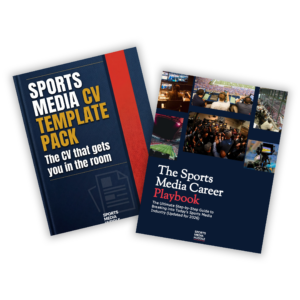
If you’re looking to turn these insights into a clear direction for your own career, The Sports Media Career Playbook breaks down the modern industry, the skills that matter most, and how to position yourself within today’s evolving media landscape.
Whether you’re just starting out or looking to refine your path, it’s designed to help you move forward with purpose and clarity.